


“Dear children! A fire of hatred and wars is spreading in the hearts of people who do not want peace but their own weak interests. That is why, little children, you be prayer and my extended hands of love and peace for all those who are far from my motherly heart. Pray more strongly and more for the peace that God desires to give you but you do not want it. I am with you and I am praying that peace may prevail and reign in every heart. Thank you for having responded to my call.” -Our Lady of Medjugorje, in private revelation given to Marija Pavlovic-Lunetti, on October 25, 2026
An excerpt from “The Day Is Now Far Spent” by Cardinal Robert Sarah (in conversation with Nicolas Diat):
Our contemporaries have been convinced that in order to be free, it is necessary for them not to depend on anyone. This is a tragic error. The modern mistrust of all dependence explains many ills. Alas, it has not finished displaying its deleterious effects. For, if depending on another person is perceived as a negation of freedom, then every true and lasting relationship appears dangerous. The other person always becomes a potential enemy.
Now only a radically autonomous and independent man, a man who is alone, without any bond, can be a free man. He finds that he is shut off in himself. Hence, filiation, depending on a father and a mother, becomes for our contemporaries a hindrance to full freedom. We do not choose our parents, we receive them! This first experience is unbearable for contemporary man, who wishes to be the sole cause of everything that happens to him and of all that he is. To him, receiving appears to be contrary to his dignity. The education that we have received from our parents seems like an offense against a freedom that is thought of as self-creating.
With greater reason, the idea of receiving our nature as man and woman from a Creator-God becomes humiliating and alienating. In this way of thinking, it is necessary to deny the very notion of human nature or the reality of a sex that has not been chosen.
I think it is time to liberate man from this hatred of all that he has received. In order to do that, we urgently need to discover the true nature of our liberty, which flourishes and is strengthened by agreeing to be dependent through love. Indeed, all love creates a relation with the object of our love that is a bond, a gift, a free dependence.
The fundamental rejection of all bonds, of all filiation, is basically nothing but the renewal of what the Book of Genesis describes for us as original sin. In a homily given on December 8, 2005, [Pope] Benedict XVI asked:
What picture does this passage show us? The human being does not trust God. Tempted by the serpent, he harbors the suspicion that in the end, God takes something away from his life, that God is a rival Who curtails our freedom, and that we will be fully human only when we have cast Him aside; in brief, that only in this way can we fully achieve our freedom.
The human being lives in the suspicion that God’s love creates a dependence and that he must rid himself of this dependency if he is to be fully himself. Man does not want to receive his existence and the fullness of his life from God.
He himself wants to obtain from the tree of knowledge the power to shape the world, to make himself a god, raising himself to God’s level, and to overcome death and darkness with his own efforts. He does not want to rely on love that to him seems untrustworthy; he relies solely on his own knowledge since it confers power upon him. Rather than on love, he sets his sights on power, with which he desires to take his own life autonomously in hand. And in doing so, he trusts in deceit rather than in truth and thereby sinks with his life into emptiness, into death.
Love is not dependence but a gift that makes us live. The freedom of a human being is the freedom of a limited being, and therefore is itself limited. We can possess it only as a shared freedom, in the communion of freedom: only if we live in the right way, with one another and for one another, can freedom develop.
We live in the right way if we live in accordance with the truth of our being, and that is, in accordance with God’s Will. For God’s Will is not a law for the human being imposed from the outside and that constrains him, but the intrinsic measure of his nature, a measure that is engraved within him and makes him the image of God, hence, a free creature.
If we live in opposition to love and against the truth—in opposition to God—then we destroy one another and destroy the world. Then we do not find life but act in the interests of death. All this is recounted with immortal images in the history of the original fall of man and the expulsion of man from the earthly Paradise.
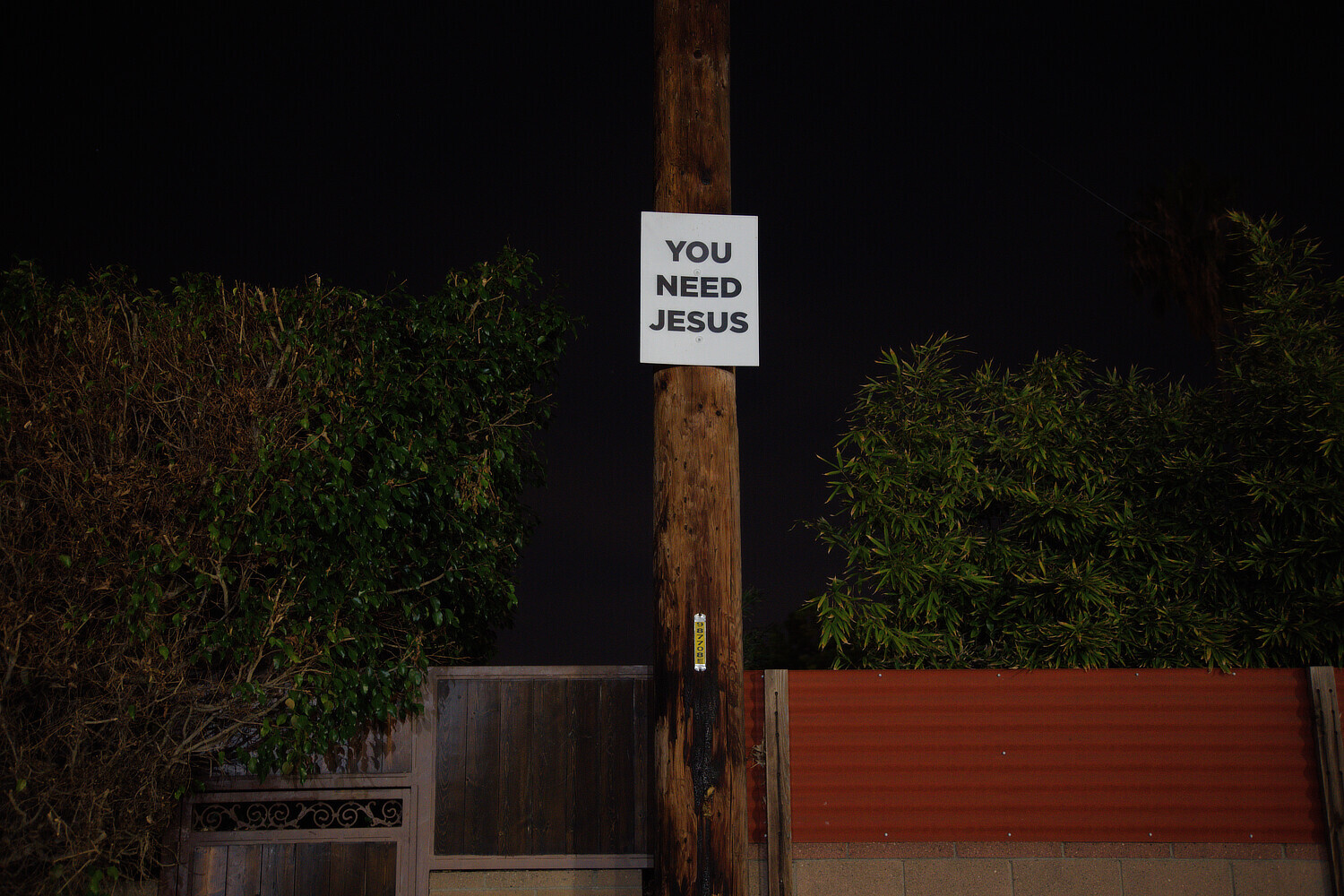
An excerpt from “The Battle of the Virtues and Vices: Defending the Interior Castle of the Soul” by Pope Saint Leo IX:
My friend, through long experience, I know well that there are two possible causes for sorrow, or, rather, there are two types of sorrow, both quite distinct from each other. One form of sorrow is beneficial and healthy and leads the soul to penitence, reformation, and improvement. But the other form is pernicious and harmful, for it leads not to repentance or improvement but rather only to the dreadful dead end of despair! One form of sorrow, holy sorrow, leads to life, but the other only brings death.
Now, it is the second form of sorrow—Worldly Melancholy—which has just been speaking to you now and is trying to tempt you. For the reasons for being sad it offers should, if considered more properly, be causes of rejoicing to you rather than sorrow! It is true that there are many difficulties which you must undergo in this life, and many apparent tragedies and misfortunes that take place, the reasons for which exceed our current understanding. No one can honestly deny this. But these should be a cause for awe and joyful expectation of what lies in the future, not of despair over the things of the present moment. For did not Christ, Who is the Giver of all good gifts and the munificent Bestower of all joys, exhort us thus: “When people persecute you and speak all kind of calumny against you, then rejoice and be glad; for, behold, your reward shall be great in heaven” (Matthew 5:11-12)?
Call to mind also the example of the apostles, which we find recounted in the book of Acts: “And the apostles left the council rejoicing, because they had been found worthy to suffer disgrace for the sake of the Name of Jesus Christ.” (Acts 5:41)
O Soul, don’t let yourself be saddened by anything in this world, for it is all passing, and shall very soon vanish away like an insubstantial dream, a fleeting vision of the night. Set your heart, rather, on the things which are eternal, and direct your immortal soul to those realities which endure forever. Let your joy be grounded in the golden hope of heaven, and let your only real sadness be in the dread of losing that ineffable delight and glory!
